The history below describes a fictional world and its premise, not a list of current features. The current game includes preparing a first vessel, deliveries, trading and personal stories. Unions and freely purchasing further hulls are not yet available.
A FICTIONAL GAME CHRONICLE
From Earth to the stars
By the year 3000, one ship can change a pilot's life. The civilization you are about to join took centuries to build. Follow its path from a small Moon base to the ports and Unions where your own story begins.
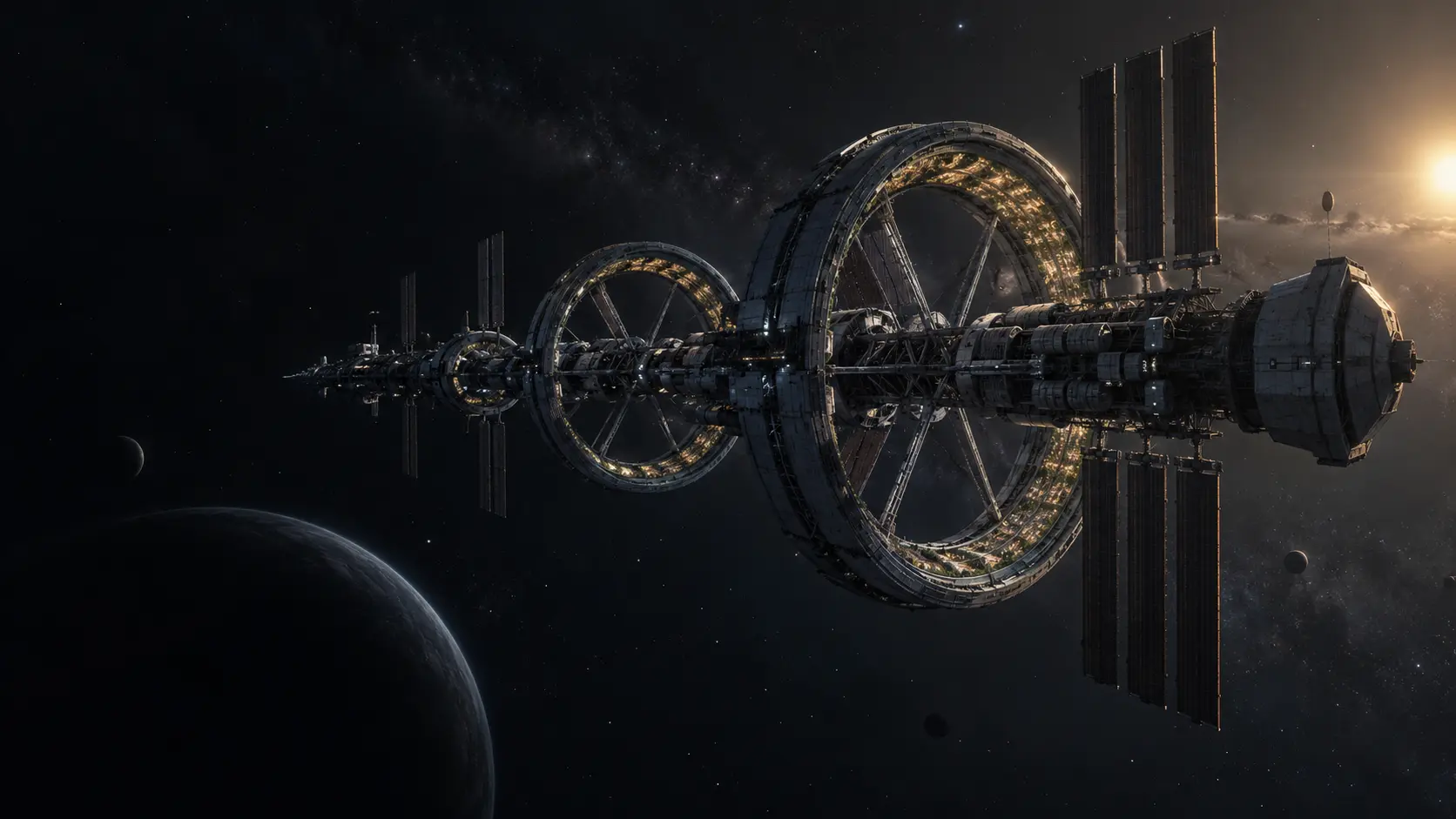
A base built to last
In UNION's fictional timeline, the first American crew begins a stay of several months at a permanent Moon base. The small outpost still depends on supplies from Earth. Life beneath a protective layer of lunar dust teaches the crew the value of every shipment, working module and dependable route home.
Other countries accelerate their own programs. The Second Moon Race opens an era in which travelling into space means more than an expedition. It increasingly means keeping people and infrastructure alive away from Earth.
Red dust and buried resources
Humans land on Mars in 2054. Robots have prepared modules and a reactor for the crew, but survival still depends on equipment, energy and a steady flow of supplies. A self sufficient city remains a distant goal.
Drilling in the following years reveals deposits of nickel, cobalt, titanium and platinum group metals. The discovery of the Great Western Deposit in 2063 changes the planet's prospects. A research outpost becomes the beginning of an industry that will need ships, ports and people able to connect the growing supply chain.
Cities held together by routes
The Moon provides materials, Mars develops its own society, and the asteroid belt supplies shipyards with water and metals. Settlements spread towards Jupiter and Saturn. Each outpost produces something and needs something else. A delivery can keep an entire installation running.
The distances between these places are still immense. Crews, warehouses, ships and reliable stock information become essential. The economy of UNION grows out of these relationships: ports offer different goods, and few can operate in isolation.
Common rules across distant worlds
Colonies develop their own interests and ideas of independence. Disputes over power and trade escalate into the Sovereignty Wars. After the hardest fighting, Central Union establishes shared registries, operator licenses and the CUC currency.
It does not erase the differences between places or the ambitions of their people. It gives pilots a framework for contracts and decisions within a scattered economy. Player created Unions are communities of their own; their name does not make each one the governing Central Union.
A comfortable life is not the only path
Earth is developed and safe. Robots carry out much everyday work, and specialized AI systems assist people. Yet the protagonist of this story sees no satisfying future there. You are looking for a place to make your own decisions and build something of your own.
The UNION program offers independent operators a path to their first ship. It means selling what you own, signing a loan contract and taking responsibility for repayments. At first, fuel, cargo and your first route matter most. Later you decide whether trade, exploration, working with others or developing your ship will shape your journey.
YOUR TURN
The story continues in the game
You can read the financing terms before signing. Then you choose a ship and take your first steps in port.